JES Lighting
Unmatched Lifecycle Savings
A 10-Year Cost Comparison
Most facilities spec a lamp by purchase price. JES lamps pay for themselves inside three years — and keep paying for seven more. Here's the math.
10-Year Lifecycle Cost Comparison
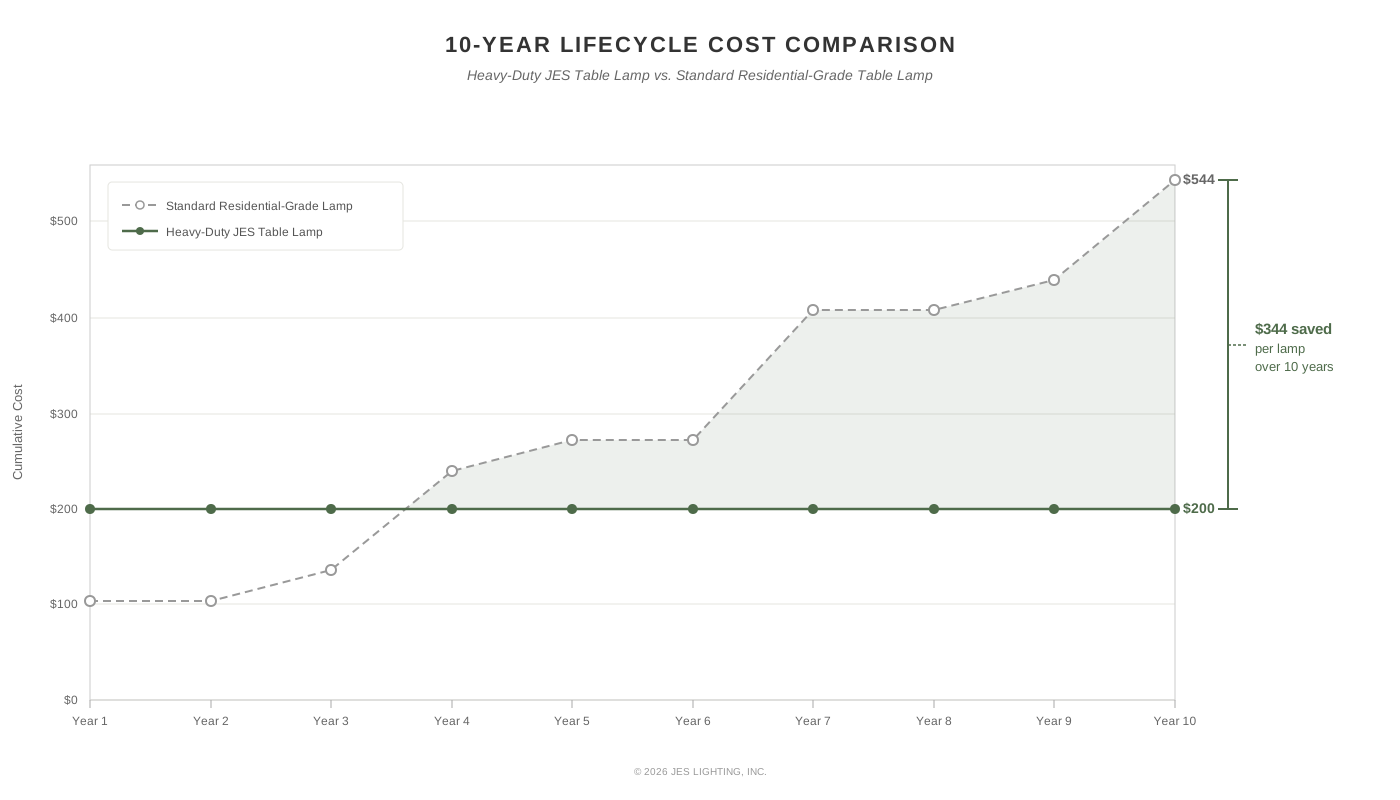
Year-by-Year Cost Breakdown
| Year | Annual Cost | Cumulative Cost |
|---|---|---|
| 1 | $200 | $200 |
| 2 | — | $200 |
| 3 | — | $200 |
| 4 | — | $200 |
| 5 | — | $200 |
| 6 | — | $200 |
| 7 | — | $200 |
| 8 | — | $200 |
| 9 | — | $200 |
| 10 | — | $200 |
| 10-Year Total | $200 | |
Heavy-Duty JES Table Lamp
10-year factory warranty on lamp and shade. Zero replacement cycles.
10-year factory warranty on lamp and shade. Zero replacement cycles.
| Year | Annual Cost | Cumulative Cost |
|---|---|---|
| 1 | $104 | $104 |
| 2 | — | $104 |
| 3 | $32 | $136 |
| 4 | $104 | $240 |
| 5 | $32 | $272 |
| 6 | — | $272 |
| 7 | $136 | $408 |
| 8 | — | $408 |
| 9 | $32 | $440 |
| 10 | $104 | $544 |
| 10-Year Total | $544 | |
Standard Residential-Grade Table Lamp
1-year warranty on lamp, 90-day warranty on shade. Assumes lamp replacement every 3.5 years, shade replacement every 2 years.
1-year warranty on lamp, 90-day warranty on shade. Assumes lamp replacement every 3.5 years, shade replacement every 2 years.
$344 saved per lamp over 10 years
Multiply by your room count to see the full picture.
Methodology & Assumptions
- A standard residential-grade lamp in an institutional setting requires replacement approximately every 3.5 years.
- A residential-grade fabric shade requires replacement approximately every 2 years.
- Fabric shades cannot be effectively sanitized — they absorb oils and particulates over time.
- JES PolyMold shades are solid non-porous polystyrene — wipe clean with standard disinfectants (UL 94 V-0 rated).
- Fabric shades do not meet NFPA 701 flame standards; JES TriLam shades meet or exceed NFPA 701.